
Why Copper Has Remained Part of Indian Craftsmanship
By TrueAyurvedaLife Editorial Team ·
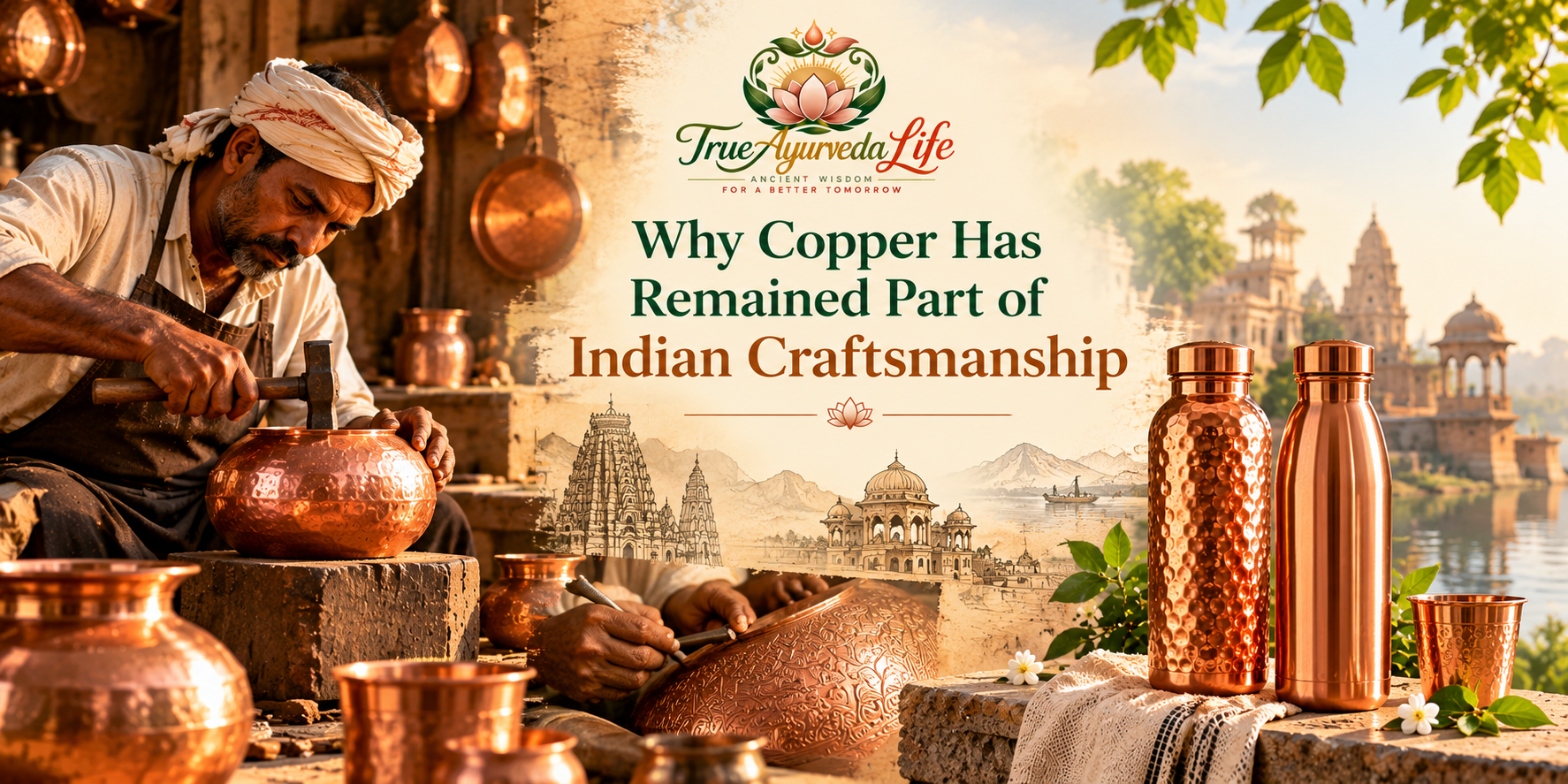
Listen closely in a traditional metalworking workshop, and you may hear a familiar rhythm: hammer striking metal, a vessel gradually taking shape, and a craftsperson examining the surface before the next blow.
Each movement serves a purpose. A flat sheet becomes a curved vessel, an uneven surface develops a pattern, and a practical object begins to reveal the skill behind its making.
Across India, copper has been part of this craft tradition for generations. Its story is not simply about a metal or the objects made from it. It is also about the communities, knowledge, and working traditions that have helped keep metal craftsmanship alive.
Understanding why copper remains part of Indian craftsmanship means looking beyond the finished product to the hands and heritage behind it.
1. A Metal With a Long Cultural Presence
Copper has been used in India to create a wide range of objects, including household vessels, decorative pieces, coins, and items associated with cultural and religious practices.
Its distinctive reddish-brown colour gives it an identity of its own, while its workable nature allows craftspeople to shape it into different forms.
In traditional households, metal vessels served practical purposes, from storing and serving water to preparing and presenting food. Copper objects also appeared in ceremonial settings, where their material and appearance carried cultural significance.
These uses varied across regions and communities. There is no single story that represents every Indian metalworking tradition, but copper has remained recognisable within many of them.
2. The Knowledge Behind the Hammer
A finished copper vessel may look simple, but shaping metal requires experience, patience, and control.
Depending on the method, craftspeople may cut metal sheets, heat the material, hammer it into shape, join sections, and refine the surface. Each stage calls for a different combination of judgement and technique.
Hammering is particularly revealing. The craftsperson must understand how the metal responds to repeated blows and how to achieve the desired form without compromising the work.
The process is not simply a matter of applying force. It involves recognising small changes in shape, adjusting movements, and knowing when the material needs further treatment.
That practical knowledge is one reason traditional metalworking deserves recognition as a skilled craft rather than merely a manufacturing process.
3. Regional Traditions, Different Stories
Indian copper craftsmanship is not limited to one region or community. Different places have developed their own techniques, designs, products, and working traditions.
In Pune, Maharashtra, the traditional copper-working community known as the tambats has been associated with beaten copper work. Workshops in the historic Tambat Ali area have produced copper and brass objects using hand-forming techniques and specialised tools. <Cite refs={["turn430317search5","turn430317search9"]}/>
In Kashmir, copperware is known for its engraved decoration and intricate designs. Artisans use techniques such as naqashi to create floral patterns and other detailed surface work. <Cite refs={["turn430317search1"]}/>
These examples show how a shared material can inspire different expressions of craftsmanship. Local influences, community knowledge, customer needs, and artistic preferences all contribute to the character of the finished object.
4. When Craft Becomes Community Heritage
Some metalworking traditions are closely connected to the identity of the communities that practise them.
A notable example is the traditional brass and copper utensil-making craft of the Thatheras of Jandiala Guru in Punjab. The craft was inscribed on UNESCO's Representative List of the Intangible Cultural Heritage of Humanity in 2014. <Cite refs={["turn430317search0","turn430317search3"]}/>
The work involves shaping metal into utensils through processes that include hammering, heating, and manual finishing. Knowledge has traditionally been transmitted through family and community relationships.
This makes the craft more than a way to produce household objects. It represents a body of knowledge maintained through practice, teaching, and shared experience.
When such traditions continue, they preserve not only techniques but also the stories and identities connected with them.
5. The Beauty of Handmade Details
One of the most recognisable features of handcrafted copperware is its surface.
A hammered vessel may display small indentations that catch the light differently across its body. Engraved designs can introduce intricate patterns, while a smooth finish highlights the metal's natural colour.
These details reflect different approaches to design. Some craftspeople focus on texture and visible hammer marks; others specialise in fine engraving, shaping, or polishing.
Handcrafted objects may also show subtle variations. Such differences can be part of the character of a particular making process, although they should not be confused with proof of material purity or quality.
Appreciating craftsmanship means noticing how the object has been formed and finished, not simply judging it by whether every surface looks identical.
6. From Traditional Vessels to Modern Copper Drinkware
Craft traditions continue to evolve as people's needs change.
Traditional copper vessels were often designed for household storage, serving, or specific cultural purposes. Modern copper bottles adapt the material to a more portable format suited to commuting, work, travel, and everyday hydration.
The shape may be different, but several design considerations remain familiar: proportion, surface finish, the joining of components, and the practical use of the finished object.
For a closer look at this transition, read our story of the copper water bottle, from Tamba to today. It explores how traditional copper vessels connect with contemporary drinkware and changing daily routines.
Modern design can help keep a material relevant, but a copper-coloured finish alone does not establish that a product is made from copper. Clear material specifications remain important when choosing copper drinkware.
7. Keeping Traditional Skills Relevant
Traditional craftsmanship can face challenges when production methods, consumer preferences, and market conditions change.
Handwork often requires time, specialised tools, and years of practice. Mass-produced alternatives may be manufactured differently and sold at different price points, creating challenges for craftspeople whose work depends on specialised skills.
Preserving a craft therefore involves more than appreciating its finished products. It also means recognising the people who practise it, supporting transparent businesses, documenting techniques, and creating opportunities for traditional skills to remain economically viable.
Consumers can contribute by learning about the craft behind an object and asking meaningful questions about its materials and manufacture.
Not every copper product is handmade, and not every maker uses the same process. Honest descriptions help distinguish traditional craftsmanship from general product styling.
8. Why Copper Craftsmanship Still Matters
In a world filled with standardised products, handcrafted objects can offer a visible connection to material and technique.
A hammered copper bottle, for example, may bring texture and warmth to an everyday object. Its appeal can come from its appearance, its connection with Indian metalworking traditions, or the simple pleasure of using something made with care.
Copper's place in Indian craftsmanship is not sustained by nostalgia alone. It continues through changing designs, contemporary uses, and the skills of people who work with the material.
Respecting that heritage means valuing the craft without making exaggerated claims about every product or assuming that all traditional practices remain unchanged.
A Craft Tradition That Continues to Evolve
Copper has remained part of Indian craftsmanship because it brings together material qualities, practical uses, artistic possibilities, and community knowledge.
From the rhythmic work of metalworkers to the textured surface of a finished vessel, each stage offers a glimpse into the skill behind an everyday object.
At True Ayurveda Life, we appreciate the connection between traditional materials and contemporary living. A copper water bottle can be one way to bring that appreciation into a modern routine, provided its material and construction are clearly described.
Behind every crafted object is a story of skill, time, and tradition—and that story deserves to be understood as well as admired.