
From Tamba to Today: The Story of the Copper Water Bottle
By TrueAyurvedaLife Editorial Team ·
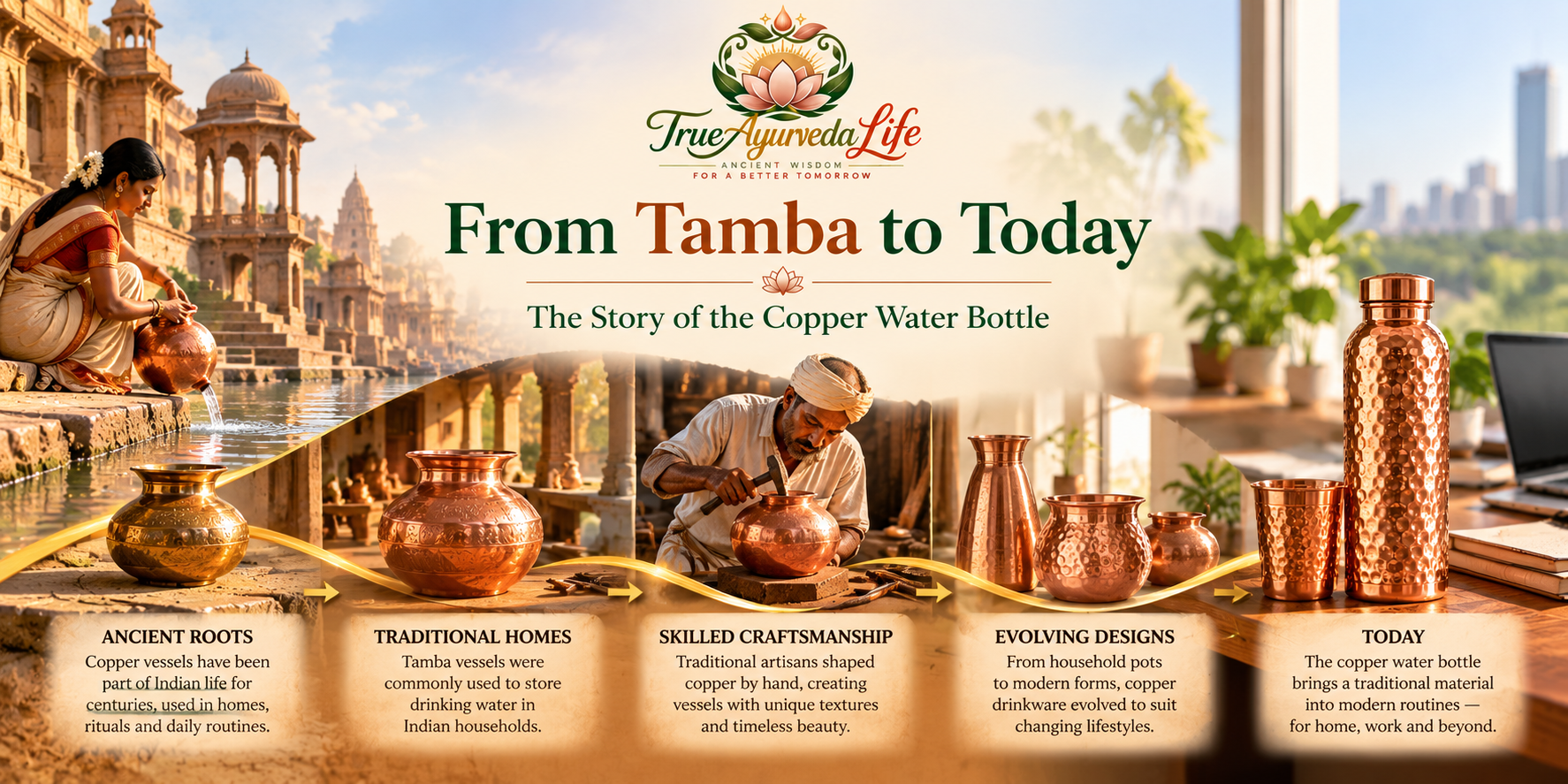
Imagine an Indian household in the early morning. Sunlight enters through an open window, the kitchen begins to stir, and a copper vessel stands quietly in its familiar place. Someone lifts it to pour water into a glass. It is an ordinary moment, repeated so often that it hardly seems remarkable. Yet within that simple object lies a story of material, craftsmanship, family customs, and changing ways of life.
Today, the copper water bottle brings a version of this tradition into offices, homes, and everyday journeys. Its shape may have changed, but its connection with Indian heritage remains part of its appeal. This is the story of how traditional tamba vessels found a place in modern hydration.
A Familiar Presence in Indian Homes
Copper vessels have long been used in Indian households for practical and cultural purposes. Pots, containers, and other metal objects were part of domestic life, their usefulness shaped by local materials, customs, and craftsmanship.
In some homes, copper vessels were used to store drinking water. In others, metal vessels also appeared during ceremonies, festivals, and family occasions. These practices were not identical across India. Different regions and households developed their own ways of choosing, using, and caring for domestic objects. Still, copper became recognisable within many traditional settings.
A vessel was more than something to hold water. It was an object handled every day, kept within reach, and sometimes passed from one generation to another. That familiarity helped copper remain connected with the rhythms of home.
The Material Behind the Tradition
Part of copper's story begins with the material itself. Copper is a workable metal that can be shaped into vessels and objects using different metalworking techniques. Its warm reddish-brown colour gives it a distinctive appearance, while its surface can develop changes in tone as it ages.
For craftspeople, copper offers opportunities to shape, form, and finish a practical object with individual character. Depending on the technique, a vessel may have a smooth surface, a polished sheen, or a hammered texture. These qualities help explain why copper has continued to appeal beyond its original practical uses. It is a material that can be functional while also carrying a strong visual identity. The result is a household object that can be appreciated for both its usefulness and its craftsmanship.
Tamba Jal: A Simple Daily Ritual
The words tamba jal bring together two familiar ideas: copper and water.
In traditional Indian practice, water stored in a copper vessel has been associated with everyday routines and, in some contexts, Ayurvedic traditions. For many people, the practice represents a connection with habits learned at home. There is something meaningful about the continuity of a simple ritual. A vessel is filled, placed where it is convenient, and used when water is needed. No elaborate routine is required.
Today, interest in Tamba Jal continues partly because people are looking for ways to bring familiar cultural practices into modern life. It is worth keeping tradition and scientific evidence distinct. The history of copper vessels can be appreciated without assuming that every wellness claim made about copper-stored water has been scientifically established. The lasting story is not only about what a vessel contains, but also about the place it occupies in everyday life.
From Traditional Pots to Portable Bottles
Household water vessels and modern water bottles serve related purposes, but they belong to different settings. A traditional pot might remain in one place, serving several people throughout the day. A portable bottle is designed around individual routines: carrying water to work, keeping it nearby while studying, or taking it along on a journey.
As lifestyles changed, the forms of everyday objects changed with them. Modern copper bottles bring the material into a shape that fits more easily into contemporary routines. They can sit on a desk, travel in a bag, or accompany someone during a day away from home. This shift does not mean the older vessel has become irrelevant. Instead, it shows how a familiar material can be adapted to different needs while retaining a connection to its past.
The Hands Behind the Craftsmanship
A finished copper bottle may look simple, but its appearance reflects decisions about forming, proportion, surface treatment, and finishing.
Hammered designs reveal repeated marks across the surface, creating texture and variations in how light falls on the metal. Smoother designs offer a quieter appearance, allowing the natural colour of copper to take centre stage.
Different finishes appeal to different preferences. Some people enjoy the visible character of a hammered surface, while others prefer a cleaner, more minimal shape.
Craftsmanship should be considered alongside material specifications, however. A textured surface or handmade appearance does not, by itself, establish copper purity or prove how a product was manufactured.
Appreciating the craft means recognising the work behind an object while still asking clear questions about the product itself.
When Heritage Meets Modern Design
Modern copper bottles reflect a meeting between familiar materials and contemporary expectations. People may look for a bottle that is easy to carry, comfortable to hold, straightforward to fill, and suited to their everyday habits. Design choices such as capacity, opening size, lid construction, and surface finish all affect the experience. At the same time, copper offers a visual warmth that can feel different from the more industrial appearance of some modern drinkware.
For some buyers, this combination is the attraction: a practical object with a connection to traditional Indian craftsmanship. The appeal does not need to depend on dramatic health promises. Cultural meaning, material character, reusable design, and personal preference are all legitimate reasons to appreciate a product.
Carrying Tradition Into Everyday Life
Imagine that same morning again, this time in a modern setting. A copper bottle stands beside a laptop, rests on a kitchen counter, or travels in a work bag.
The surroundings have changed, but the basic habit remains familiar: keeping drinking water close at hand. This is how traditions often continue. They do not always survive by remaining exactly as they were. Sometimes they become part of new routines, taking a different form while retaining something recognisable from their origins.
A copper water bottle can represent that connection for someone who values Indian heritage, appreciates metal craftsmanship, or simply prefers its distinctive appearance. The meaning will differ from person to person. What matters is choosing thoughtfully and understanding the object beyond its surface.
A Story Still Being Written
The journey from traditional tamba vessels to modern copper bottles is a story of continuity and change. Copper has remained present in domestic life and cultural practices, while the objects made from it have adapted to different settings and needs.
At True Ayurveda Life, we see copper drinkware as an opportunity to bring traditional materials into contemporary routines with thoughtful design and clear product information.
A bottle cannot tell the whole story of Indian craftsmanship, but it can offer a small connection to it—something practical to carry, use, and appreciate.
From the vessels of yesterday to the bottles of today, the story of copper continues wherever tradition finds a place in everyday life.