
What Is Tamba Water? Understanding the Traditional Copper-Water Practice
By TrueAyurvedaLife Editorial Team ·
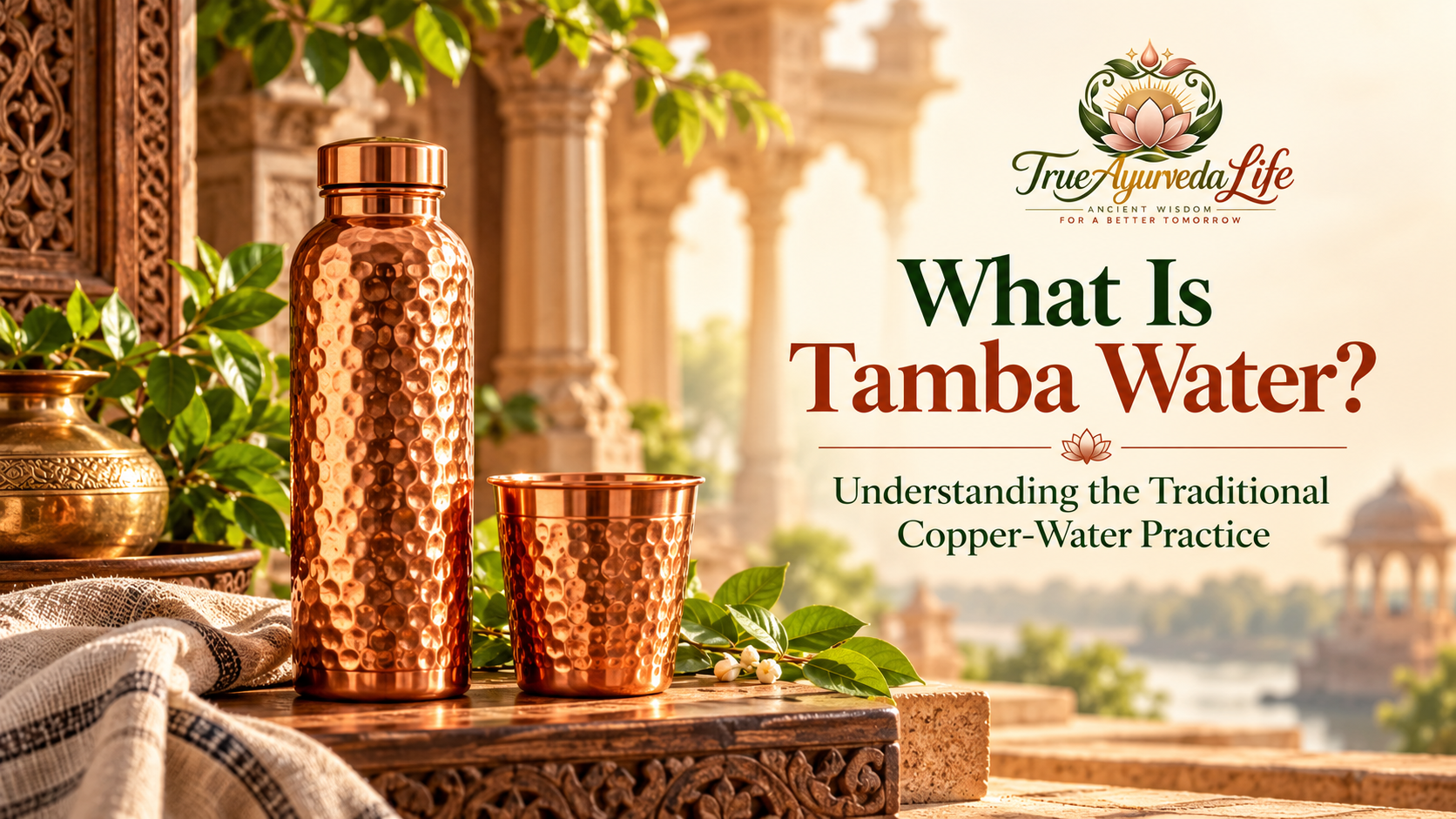
Long before reusable water bottles became part of modern wellness culture, copper vessels held a familiar place in many Indian households. Water was often stored in traditional copper pots, containers, and bottles as part of everyday routines. Known as Tamba Jal, or copper-stored water, this practice connects traditional Indian living with a simple daily activity: drinking water.
But what exactly is Tamba water? Why has copper been used for water storage, and how does this tradition fit into modern life?
Let's explore the meaning, cultural background, and practical considerations behind this longstanding practice.
What Is Tamba Water?
Tamba is the Hindi word for copper, while jal means water. Together, Tamba Jal refers to water stored in a copper vessel. Traditionally, households used copper pots and other metal containers to keep drinking water available throughout the day. Today, the same idea can be incorporated into daily routines through a copper water bottle. The practice is often associated with Ayurveda, India's traditional system of health and wellness, where daily habits, food, and routines are considered important parts of a balanced lifestyle. Tamba water is therefore more than a name for water stored in a particular material. For many people, it represents a connection with household traditions passed down through generations.
The Traditional Connection Between Copper and Indian Households
Copper has a long history of use in Indian homes. Copper vessels have been valued for their distinctive appearance, practical uses, and place in traditional customs. Depending on the household and region, metal vessels may also feature in religious ceremonies, festive occasions, and daily rituals.
Water storage was one practical use of copper. A dedicated vessel could keep drinking water readily available, making hydration part of the household routine. These customs have varied across communities and generations. Not every Indian household follows the same practices, but copper continues to hold cultural significance in many traditional settings.
Today, a tamba water bottle offers a portable interpretation of this familiar household object.
What Is the Connection Between Tamba Jal and Ayurveda?
Ayurveda traditionally emphasises daily routines, often described through the concept of dinacharya. These routines may include personal hygiene, eating habits, physical activity, and other practices intended to support an organised way of living.
Copper vessels appear in some traditional Ayurvedic practices involving water storage. The modern interest in copper bottles often comes from this historical association. However, it is important to distinguish traditional beliefs from scientifically established health outcomes.
The existence of a practice in Ayurveda does not automatically establish that it treats a disease or provides every benefit claimed in contemporary marketing. Copper is an essential trace mineral, but the body needs it in appropriate amounts, and excess exposure can be harmful.
Understanding this distinction allows us to appreciate cultural traditions while making informed decisions about everyday health.
Why Do People Still Choose Copper Water Bottles?
Interest in copper bottles today reflects several different preferences.
A connection with tradition: Some people appreciate carrying forward a familiar Indian household practice in a modern format.
Distinctive craftsmanship: Copper has a warm metallic appearance, and hammered or polished finishes can highlight the character of the material.
Reusable everyday drinkware: A well-maintained bottle can be used repeatedly, making it an alternative to regularly purchasing disposable water bottles.
A mindful hydration routine: Keeping a dedicated water bottle nearby can serve as a simple reminder to drink water throughout the day.
These reasons do not require exaggerated health promises. The appeal can come from the material, the design, and the role the bottle plays in a person's routine.
How Is Tamba Water Traditionally Prepared?
The basic practice is straightforward: drinking water is placed in a suitable copper vessel and stored before consumption. If you want to incorporate this practice into your routine, use clean, potable water and a bottle specifically intended for drinking water.
Follow the manufacturer's directions for storage and cleaning rather than assuming every copper vessel is suitable for the same use. The appropriate storage duration may depend on the product and relevant safety guidance. Keep the bottle clean, and do not treat copper storage as a substitute for safe drinking-water treatment. If your water supply is unsafe, use an appropriate treatment method before drinking it.
Can You Drink Tamba Water Every Day?
Whether a copper bottle is suitable for everyday use depends on its construction, the water being stored, and how the vessel is maintained. Copper can enter water under certain conditions. Factors such as acidity, water chemistry, and contact time can influence how much copper dissolves into it.
For everyday use, choose a product with clear material specifications, store plain drinking water, and follow its care instructions. Avoid using ordinary copper bottles for acidic drinks such as lemon water unless the manufacturer explicitly confirms that the product is designed for that purpose. People with conditions affecting copper metabolism should seek advice from a qualified healthcare professional before deliberately increasing copper exposure. For most readers, the important principle is simple: appreciate the traditional practice without assuming that more copper exposure is necessarily better.
What Makes a Copper Vessel Different From Other Bottles?
Every bottle material has its own characteristics. Copper offers a distinctive appearance and a direct connection with traditional Indian water-storage practices. Stainless steel is widely used in modern drinkware, while glass allows users to see the contents and does not have the same metal surface.
The best choice depends on your needs, preferred design, maintenance habits, and intended use. If you choose a pure copper water bottle, check the product description carefully. Copper-coloured finishes and copper-plated products are not necessarily the same as bottles whose bodies are made from copper. Material transparency matters more than marketing language.
Bringing Tamba Jal Into Modern Life
Traditional practices can remain meaningful when adapted thoughtfully to contemporary routines. A copper bottle can sit on a work desk, accompany you during the day, or become part of a morning hydration habit. Some people may also appreciate its connection to family customs and Indian craftsmanship. You do not need to make the routine complicated. Keep the bottle clean, use it for its intended purpose, and make regular hydration the central habit. The value of a daily ritual often lies in its consistency and personal meaning, rather than in claims that promise extraordinary results.
Frequently Asked Questions About Tamba Water
Is Tamba water the same as copper water?
Yes. Tamba water generally refers to drinking water stored in a copper vessel. The term is commonly used in the context of Indian household and Ayurvedic traditions.
Is Tamba Jal an Ayurvedic practice?
Copper-vessel water storage is associated with some traditional Ayurvedic practices. Specific health claims should still be evaluated separately rather than assumed to be scientifically proven.
Can I store lemon water in a copper bottle?
Plain water is the straightforward choice for an ordinary copper bottle. Acidic drinks can increase copper release, so use a different suitable container unless the product is specifically designed for acidic beverages.
Does copper-stored water replace medical treatment?
No. Tamba Jal is a traditional water-storage practice, not a substitute for medical care, prescribed treatment, or safe drinking-water practices.
A Tradition That Continues to Evolve
Tamba Jal reflects a meeting point between household tradition, material craftsmanship, and everyday hydration. Its continuing appeal comes from its connection with Indian culture and the simplicity of a familiar daily practice.
At True Ayurveda Life, we believe traditional materials deserve thoughtful design and clear information. A copper water bottle can bring a piece of this heritage into modern life when chosen carefully and used appropriately.
Ancient wisdom can inspire modern routines—especially when tradition is accompanied by informed, responsible choices.