
How to Tell if a Copper Water Bottle Is Genuine: 9 Things to Check
By TrueAyurvedaLife Editorial Team ·
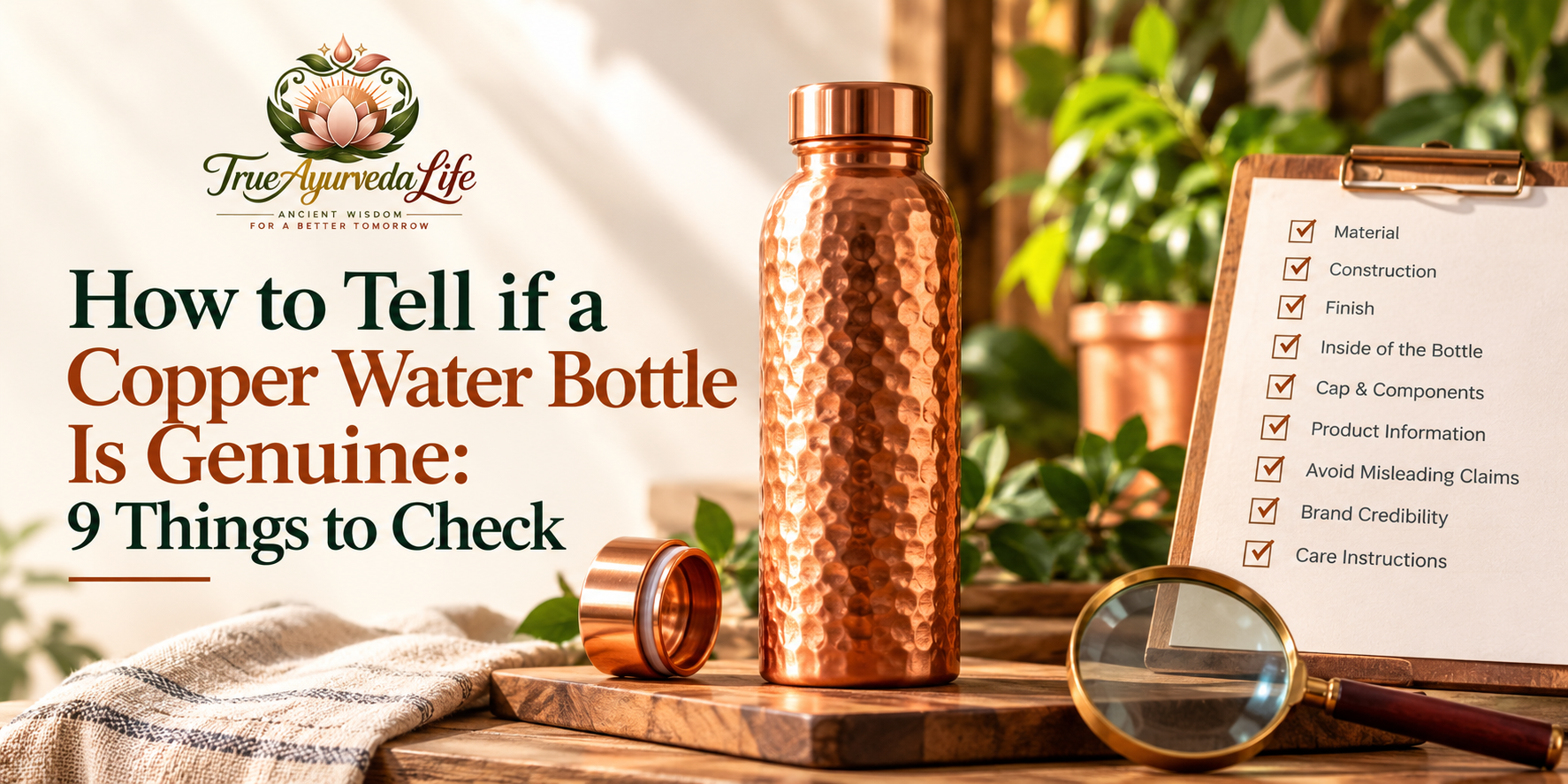
Copper water bottles have become popular among people looking for reusable drinkware with traditional roots. But with so many products available online, one important question comes up:
How can you tell whether a copper water bottle is actually made from copper?
The answer isn't simply about how shiny, heavy, or expensive a bottle looks. A reliable evaluation starts with understanding the material, reading the product information carefully, looking at the construction, and knowing the difference between pure copper and copper-plated products.
If you're considering a pure copper water bottle for everyday hydration, here are nine practical things to check before buying.
1. Start With the Material
The first thing to check is the material description. A genuine copper water bottle should clearly state what material the bottle is made from. Look for specific wording such as pure copper, 100% copper, or a clearly stated material specification from the manufacturer.
Be cautious when a listing simply says "copper bottle" without explaining the construction. The word copper can sometimes describe the appearance, finish, coating, or one component rather than the entire bottle. Clear material information makes it easier to understand what you're actually buying.
2. Understand Pure Copper vs. Copper-Plated
A pure copper water bottle is made from copper as the primary material of the bottle body. A copper-plated bottle uses another material with a layer of copper applied to its surface.These products can look remarkably similar in photographs, so appearance alone isn't enough.
If you're specifically looking for a 100% copper water bottle, check the product specifications rather than relying on the colour or finish shown in an image.
3. Read the Product Description Carefully
A trustworthy product listing should provide useful information instead of relying entirely on attractive photographs.
Look for details such as:
Material
Capacity
Dimensions
Construction
Finish
Lid material
Care instructions
Intended use
Manufacturer or brand information
The goal isn't to find the longest product description. It's to find clear and specific information. A seller who explains the product properly gives you a better basis for making an informed choice.
4. Don't Judge Copper by Its Colour Alone
Copper has a distinctive warm reddish-brown appearance, but colour isn't a reliable way to establish material purity. A new copper bottle may have a bright, polished appearance. A hammered bottle may have a textured surface. Over time, copper can naturally change appearance as it interacts with its surroundings. That means a darker or less shiny bottle isn't necessarily inferior, and a highly polished bottle isn't automatically pure copper.
Finish tells you about appearance. Product specifications tell you about material.
5. Look at the Construction
Does the body appear carefully formed? Are the seams, joints, neck and base finished properly? Does the product description explain how the bottle is constructed?
For handcrafted products, small variations in texture or finish can be part of the character of the material and manufacturing process. This is especially relevant when choosing a handcrafted copper drinking bottle. Craftsmanship should be considered alongside material rather than treated as proof of purity by itself.
6. Check the Inside of the Bottle
Some products may have an interior coating, lining, or different material. That doesn't automatically make a product unsuitable, but it does mean you should understand its construction. If a listing claims to be a pure copper water bottle, look for clear information about the interior. When this information isn't provided, contacting the manufacturer or seller is better than making assumptions from photographs.
7. Examine the Cap and Other Components
A bottle doesn't necessarily consist entirely of one material. The body may be copper while the cap, seal, gasket, or other components are made from different materials. This is common with reusable drinkware.
The important thing is transparency. Check what the manufacturer says about the bottle body and individual components, particularly if material specifications matter to you. This also helps you understand how to clean, store, and use the bottle properly.
8. Be Careful With "Purity Tests" Found Online
You may come across home tests claiming to prove whether a bottle is genuine copper. Some involve magnets, scratching the surface, examining colour changes, or judging sound and weight. These methods shouldn't be treated as definitive proof of material composition.
A visual inspection cannot reliably establish copper purity, while a surface test may tell you little about what lies underneath. If material composition is important, manufacturer specifications and appropriate material testing are much more meaningful than internet shortcuts.
9. Consider the Manufacturer and Product Information
A credible manufacturer should be willing to explain what the product is made from and how it should be used and maintained.
Before purchasing, consider:
Does the brand clearly identify the material?
Are product specifications easy to find?
Are care instructions provided?
Is the intended use clearly explained?
Does the company provide customer support?
Are product claims presented responsibly?
Good product information doesn't need dramatic promises. Straightforward information can often be more useful than a long list of exaggerated wellness claims.
What About the Ayurvedic Connection?
Copper vessels have a long history in Indian households and are traditionally associated with tamba water—water stored in a copper vessel. Ayurvedic traditions have also included copper vessels as part of traditional water-storage practices. However, tradition and modern health claims should not be confused.
Choosing an Ayurvedic copper water bottle can be a way of incorporating a traditional practice into a modern hydration routine, but it should not be presented as a replacement for medical treatment or as a cure for health conditions.
The simplest approach is to appreciate the tradition while making your purchasing decision based on material, craftsmanship, intended use, and reliable product information.
A Simple Genuine Copper Bottle Checklist
Before buying, ask:
✓ What exactly is the bottle made from?
✓ Does the manufacturer clearly state whether it is pure copper or copper-plated?
✓ Is the interior construction explained?
✓ Are the cap and other components identified?
✓ Are care and usage instructions provided?
✓ Does the brand provide clear product information?
✓ Are the claims realistic and responsibly presented?
If the answers are clear, you're in a much better position to make an informed choice.
Choosing a Copper Bottle With Confidence
The best copper water bottle isn't necessarily the one with the most impressive claims. Look for one that gives you confidence through clear material information, thoughtful construction, appropriate care guidance, and transparent communication. Whether you're interested in copper because of its connection to Indian tradition, its distinctive craftsmanship, or simply because you want reusable drinkware for everyday hydration, knowing what you're buying makes the experience better.
At True Ayurveda Life, we believe traditional materials deserve modern transparency. A copper water bottle should be appreciated not only for how it looks, but also for the craftsmanship, material, and story behind it.
Pure copper. Thoughtful craftsmanship. Carry the wisdom of tradition into everyday life.