
How Long Can You Keep Water in a Copper Bottle? A Simple Guide
By TrueAyurvedaLife Editorial Team ·
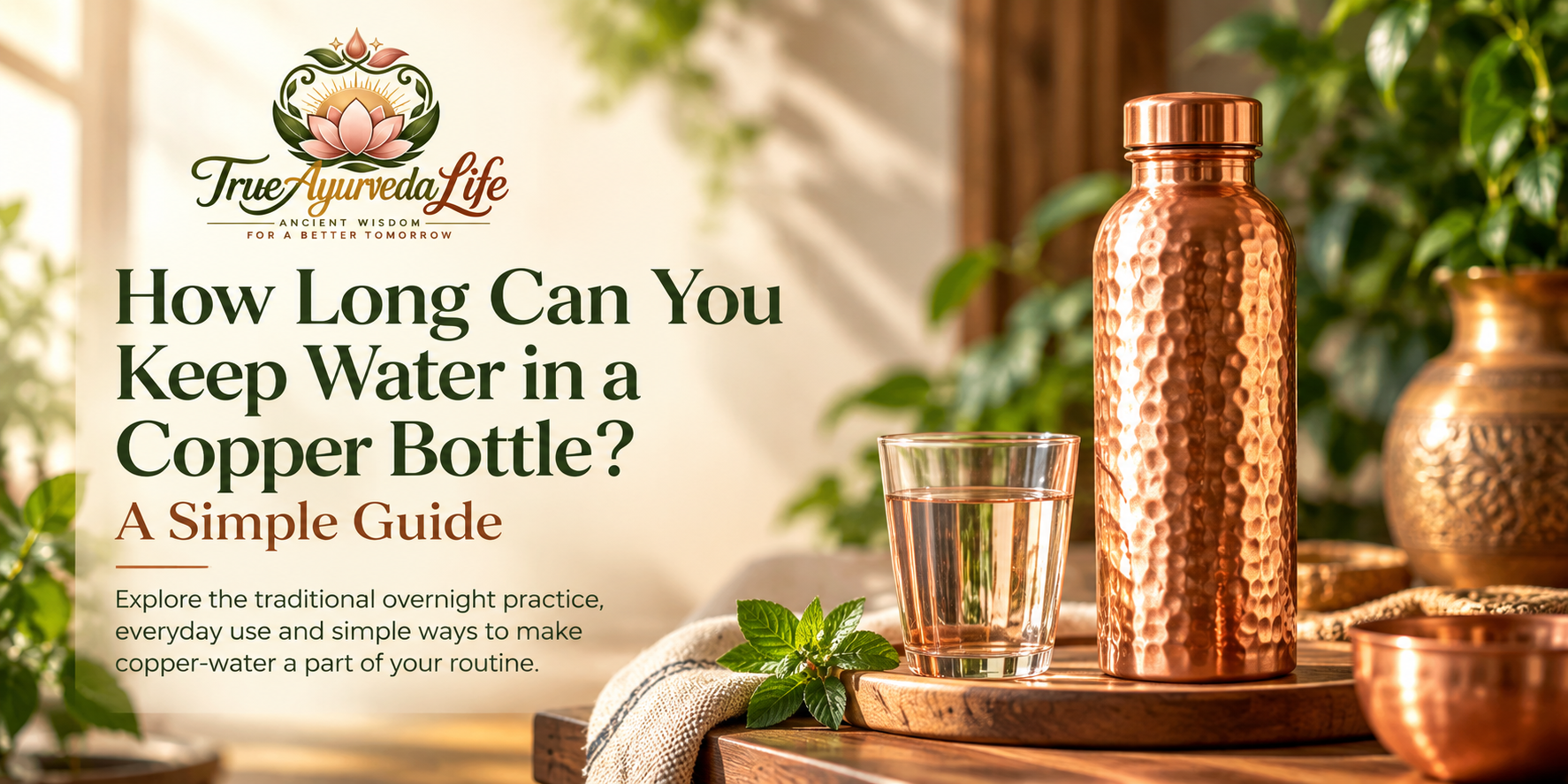
A copper water bottle is more than a beautiful reusable vessel. For many people, it represents a simple connection between traditional Indian practices and modern everyday hydration.
But once you start using one, an important question naturally comes up:
How long should water actually stay in a copper bottle?
You may have heard about storing water overnight, keeping it for several hours, or drinking it throughout the day. With so much conflicting information online, it can be difficult to know what is tradition, what is practical, and what is supported by evidence.
The good news is that using a pure copper water bottle doesn't need to be complicated.
Let's look at the practice in a simple and responsible way.
Why Do People Store Water in Copper Bottles?
Copper vessels have been used in Indian households for generations. In traditional Ayurvedic routines, water stored in a copper vessel is commonly associated with tamba water.
The practice is simple: water is placed in a copper vessel and allowed to remain there for a period of time before being consumed.
Copper itself is an essential trace mineral and is also known for its antimicrobial properties. These characteristics have contributed to the longstanding interest in copper as a material for water and food-contact applications. However, traditional use should not automatically be interpreted as a medical treatment.
A copper bottle is best understood as a traditional drinking-water vessel, not as a substitute for medical care or a solution to health conditions.
How Long Can Water Stay in a Copper Bottle?
There isn't one universal storage time that applies to every copper bottle, water source or situation.
Traditional practices often involve storing water overnight and drinking it the following morning. This remains one of the simplest ways people incorporate copper-water traditions into a daily routine.
How long water should remain in contact with copper can depend on the bottle, water quality and storage conditions, so it's best to keep the practice simple rather than treating a specific number of hours as a universal rule.
Rather than focusing on an exact number of hours, think of copper-water storage as a simple routine:
Fill → Store appropriately → Drink → Empty → Clean → Refill.
What Is the Traditional Overnight Copper-Water Practice?
The traditional practice is often quite straightforward. Water is placed in a copper vessel in the evening and left to rest overnight. It is then consumed the next morning. This practice is sometimes referred to as tamba water. The appeal isn't only about the material itself.
For many people, the ritual represents a slower and more intentional approach to everyday habits. Instead of reaching for a disposable bottle first thing in the morning, a copper vessel becomes part of the routine. However, traditional practices can vary between households and traditions. There isn't a single universal Ayurvedic instruction that applies to every person or every copper product.
Does Longer Storage Mean More Benefits?
Not necessarily. It can be tempting to assume that if some water storage is considered traditional, leaving water in copper for much longer must provide additional benefits. There isn't a good reason to make that assumption.
Longer storage doesn't automatically mean better results. In fact, responsible use means following the manufacturer's instructions rather than trying to maximize the amount of time water remains in contact with copper. The goal should be appropriate use, not maximum exposure.
If you're using a copper bottle as part of your everyday hydration routine, there is no need to turn storage time into a complicated wellness formula.
Why Plain Water Is the Simple Choice
A copper bottle for drinking water is best treated as a water vessel. Plain drinking water is the simplest option.
Acidic liquids such as lemon water, fruit juice and vinegar-based drinks can interact with copper and may increase copper transfer into the liquid. For that reason, avoid storing acidic beverages in your bottle unless the manufacturer specifically states that the bottle is suitable for them. If you enjoy lemon water, simply use a container designed for acidic beverages.
With copper, keeping things simple is often the better approach.
What Can Affect Copper-Water Storage?
Several factors can influence how copper interacts with water.
Water Quality
Always begin with clean, potable drinking water. A copper bottle doesn't make unsafe water suitable for consumption.
Acidity and pH
The chemistry of water matters. More acidic conditions can increase copper release from the vessel.
Bottle Construction
Not every product marketed as a copper bottle is constructed in the same way. Pure copper and copper-plated bottles are different products.
Temperature and Storage Conditions
Where and how the bottle is stored can also affect the overall experience. Follow the care and usage recommendations supplied with your bottle.
These factors help explain why copper-water storage is better approached as a simple daily practice rather than a fixed formula.
Should You Refrigerate Water in a Copper Bottle?
If you prefer chilled water, check whether your particular bottle is designed for refrigeration before placing it inside.
For a traditional room-temperature routine, however, there is no need to make the process complicated. Clean drinking water, appropriate storage and regular cleaning are the essentials.
How Often Should You Empty and Clean the Bottle?
Don't allow water to sit indefinitely simply because the bottle is made from copper.
After drinking the stored water, empty the bottle and give it a thorough clean before the next use.
A simple routine is:
1. Empty the bottle.
2. Rinse it thoroughly.
3. Clean it as recommended.
4. Rinse again.
5. Allow it to dry completely.
6. Refill when you're ready to use it again.
Regular care helps keep your pure copper water bottle clean and ready for everyday use.
A Simple Everyday Copper-Water Routine
You don't need an elaborate ritual.
EVENING - Fill your copper bottle with clean drinking water if you're following an overnight storage routine.
OVERNIGHT - Keep the bottle in an appropriate location according to the manufacturer's instructions.
MORNING - Drink the stored water as part of your normal hydration routine.
AFTER USE - Empty, rinse and clean the bottle appropriately.
THROUGHOUT THE DAY - Refill with fresh drinking water when needed.
Simple habits are easier to maintain than complicated routines.
Copper Water: Tradition Meets Modern Everyday Living
The continued popularity of copper water bottles isn't difficult to understand. Copper combines distinctive craftsmanship, a long history in Indian households and a connection to traditional Ayurvedic practices. At the same time, modern consumers deserve clear information rather than exaggerated promises.
If you choose to use a copper water bottle, understand the material, follow the care instructions and use it for its intended purpose. The value of the practice can be found in its simplicity.
A bottle of water.
A traditional material.
A small daily ritual.
And a reminder that everyday wellness doesn't always need to be complicated.
Bring the Tamba Tradition Into Your Routine
At TrueAyurvedaLife, we draw inspiration from India's relationship with copper and the timeless idea of bringing traditional wisdom into modern living.
Our copper bottles are designed to make that tradition practical for everyday hydration.
Pure copper. Thoughtful craftsmanship. A timeless daily ritual.
→ Explore TrueAyurvedaLife Copper Bottles