
From Disposable Plastic to Reusable Hydration: Making a Simple Everyday Switch
By TrueAyurvedaLife Editorial Team ·
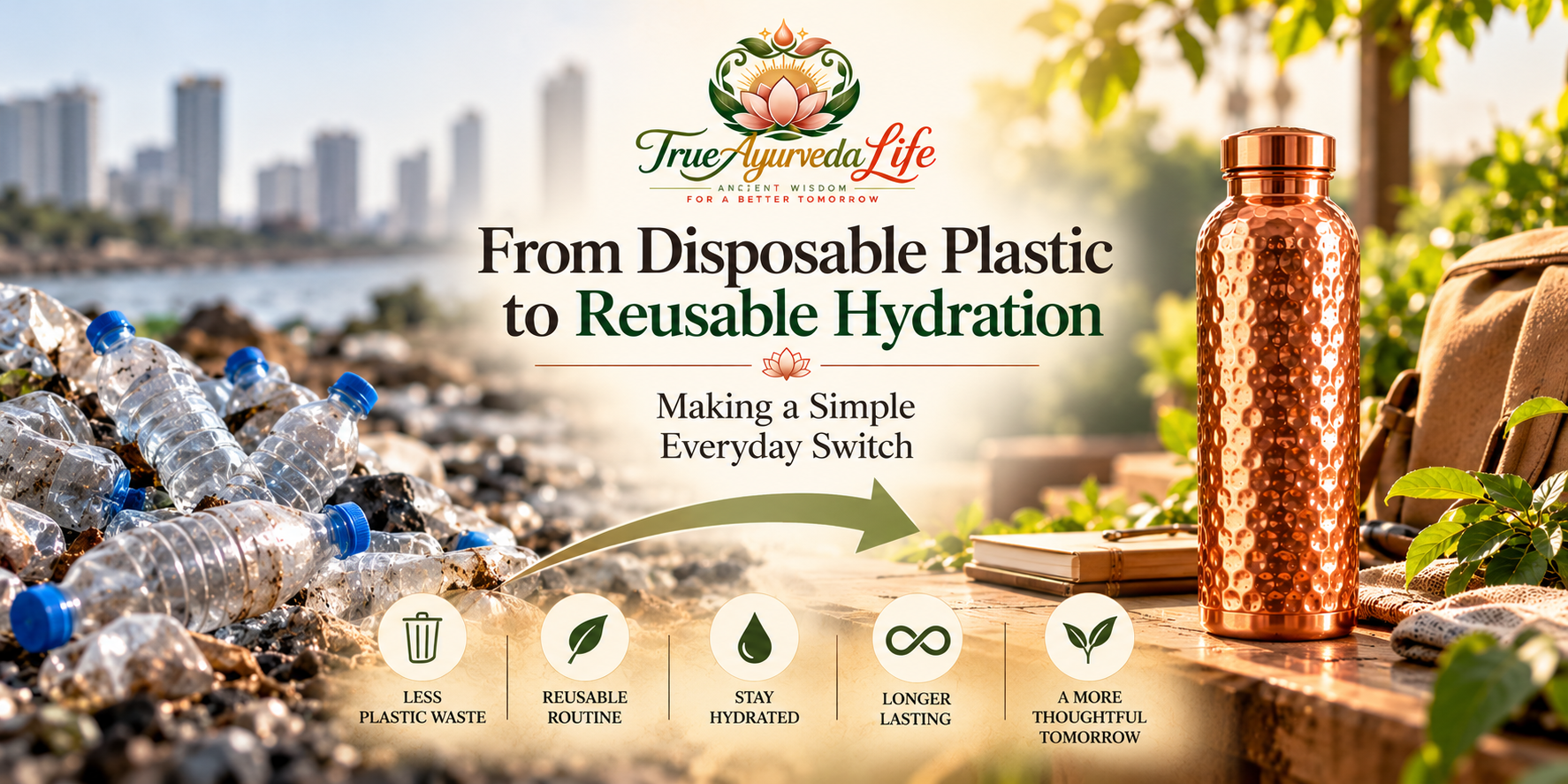
A bottle of water is one of the easiest things to buy when we are travelling, working, shopping, or spending a day away from home. It is convenient, familiar, and often available wherever we go. But when buying bottled water becomes a daily habit, the packaging we use can quickly add up.
Making a simple switch to a reusable water bottle offers another way to approach everyday hydration. Instead of repeatedly purchasing disposable bottles, we can carry a bottle we like, refill it when safe drinking water is available, and make it part of our routine.
The change does not require a complicated lifestyle overhaul. It begins with a small decision: choosing something reusable and remembering to use it.
For those who appreciate traditional materials, a copper water bottle can be one option. More importantly, the habit of refilling and reusing can help make everyday consumption more thoughtful.
1. Understanding the Disposable Bottle Habit
Disposable plastic bottles are popular for a reason. They are lightweight, portable, and convenient when we need water away from home. They can also be useful in situations where other safe drinking-water options are unavailable.
The challenge arises when single-use packaging becomes our default choice, even when we could easily refill a reusable bottle.
Think about a typical day. You leave home without water, purchase a bottle during your commute, buy another while running errands, and perhaps pick up one more on the way home. Each purchase seems small, but repeated habits influence how much packaging we use.
Plastic waste is not only a question of individual behaviour. Collection systems, recycling infrastructure, packaging design, and manufacturing practices also play important roles. Still, choosing to reuse a suitable bottle is one practical action individuals can take.
The aim is not to feel guilty about every disposable bottle. It is to recognise where a small change is realistic and useful.
2. Why Reusable Hydration Makes Sense
A reusable bottle changes the way we plan for water. Rather than buying a new container whenever we feel thirsty, we can carry one and refill it throughout the day.
This approach offers several practical advantages:
Less reliance on disposable packaging: Refilling can reduce the number of single-use bottles you purchase.
Convenience: Water is available whenever you have filled your bottle and have access to safe refills.
A more predictable routine: Keeping a bottle nearby can remind you to take regular water breaks.
Longer use of one product: A well-maintained bottle can remain useful over many repeated uses.
The environmental benefit depends on the bottle's material, manufacturing impact, transportation, cleaning requirements, and lifespan. A reusable bottle is not automatically the greener choice in every circumstance. Its potential advantage grows when it is used regularly for a long time rather than quickly replaced.
The simplest approach is to choose a bottle that suits your needs and use it consistently.
3. Choosing a Reusable Bottle That Fits Your Life
The best reusable bottle is not necessarily the most expensive or fashionable one. It is the one that fits comfortably into your everyday routine.
Before choosing, consider where you will use it most.
For work and commuting
A compact bottle that fits inside your bag can make carrying water easier. Check the lid, opening, and construction to ensure that the bottle is suitable for regular transport.
For travel and outdoor activities
Capacity and weight matter. If you will be away from reliable refill points for several hours, you may need a larger bottle or an additional water container. Always plan around access to safe drinking water.
For home and everyday use
A bottle that is easy to clean, fill, and store can become a natural part of your routine. Convenience often matters more than an elaborate design.
For a traditional aesthetic
Copper bottles appeal to people who appreciate Indian heritage, distinctive metalwork, and handcrafted finishes. Stainless steel, glass, and other reusable materials may suit different preferences.
Compare the material, construction, care instructions, and expected lifespan before deciding. A clear understanding of what you are buying is more useful than relying on broad environmental or wellness claims.
4. Is a Copper Water Bottle a Good Reusable Option?
Copper vessels have a long-standing place in Indian household traditions. Modern copper water bottles bring that familiar material into a portable form that can be used at home, at work, or while travelling.
A well-made copper bottle may appeal to those who value traditional craftsmanship and the character of a reusable metal product. Copper can also be recycled, making material recovery possible when products reach the end of their useful lives.
However, copper has environmental impacts associated with mining, refining, and manufacturing. Its recyclability does not mean every copper bottle has a lower environmental footprint than every plastic, glass, or stainless steel alternative.
A reusable copper bottle should be chosen for its suitability and quality, not because the material alone guarantees sustainability.
5. Five Simple Ways to Make the Switch
You do not need to change every habit at once. Begin with a few practical steps.
Step 1: Keep your bottle where you can see it
Place it beside your keys, work bag, or laptop before leaving home. A visible reminder makes it easier to remember.
Step 2: Fill it before you leave
Starting the day with a filled bottle reduces the need to purchase water immediately. Use safe drinking water and refill when suitable facilities are available.
Step 3: Make refilling part of your routine
Refill your bottle at home, at work, or at another reliable source. If you are travelling, check whether safe refill stations will be available.
Step 4: Clean it regularly
Follow the manufacturer's cleaning instructions. Pay attention to the lid, threads, and other areas where moisture or residue may collect. Do not assume every bottle can be cleaned in a dishwasher or with the same products.
Step 5: Use the same bottle for as long as practical
Avoid replacing a bottle simply because another design becomes fashionable. If a component can be safely repaired or replaced, consider that option before buying a new product.
These steps turn reusable hydration from a good intention into an everyday habit.
6. What About Recycling and Plastic Waste?
Recycling remains important, but it is not the only part of responsible consumption.
Plastic recycling depends on the type of plastic, local collection facilities, sorting, contamination, and the markets available for recovered materials. Not every item placed in a recycling bin is necessarily recycled.
Reusable bottles can help reduce demand for disposable packaging when they genuinely replace repeated purchases. Yet their own production also uses resources, which is why frequent use and a long service life matter.
When a reusable bottle is no longer safe or practical to use, look into local disposal and recycling options for its material. Metal bottles may be accepted by scrap-metal collectors or suitable recycling facilities, while other materials follow different routes.
The goal is to reduce unnecessary waste wherever practical, rather than assuming that recycling alone solves the problem.
7. Making Reusable Hydration a Lasting Habit
Many lifestyle changes fail because they depend on remembering something new every day. A reusable bottle becomes easier to use when it has a permanent place in your routine.
Try connecting it to an existing habit. Fill it after breakfast, place it in your work bag before bed, or refill it when you return home. Keep a suitable bottle at your desk if that helps.
If you forget it occasionally, simply return to the routine the next day. Consistency develops through repetition, not perfection.
You can also review your own habits after a week. How often did you carry your bottle? How many times did you refill it? Were there situations where a different size or design would have been more convenient?
These small observations help you find a solution that works in real life.
8. A Small Switch With a Practical Purpose
Moving from disposable plastic bottles to reusable hydration is not about finding a perfect product or eliminating every form of packaging. It is about identifying a habit that can be improved and making the alternative convenient enough to maintain.
A reusable bottle can support that change when it is chosen thoughtfully, used regularly, and cared for over time. Copper is one option for those who appreciate its traditional Indian connection and distinctive craftsmanship, while other materials may suit different lifestyles.
At TrueAyurvedaLife, we believe everyday objects can connect heritage with modern living. The value of a reusable bottle lies not only in what it is made from, but also in how thoughtfully it becomes part of your day.
Start with one simple step: carry a bottle, refill it with safe drinking water, and make reuse a habit worth keeping.