
Copper Water Bottle vs. Stainless Steel: What's the Difference?
By TrueAyurvedaLife Editorial Team ·
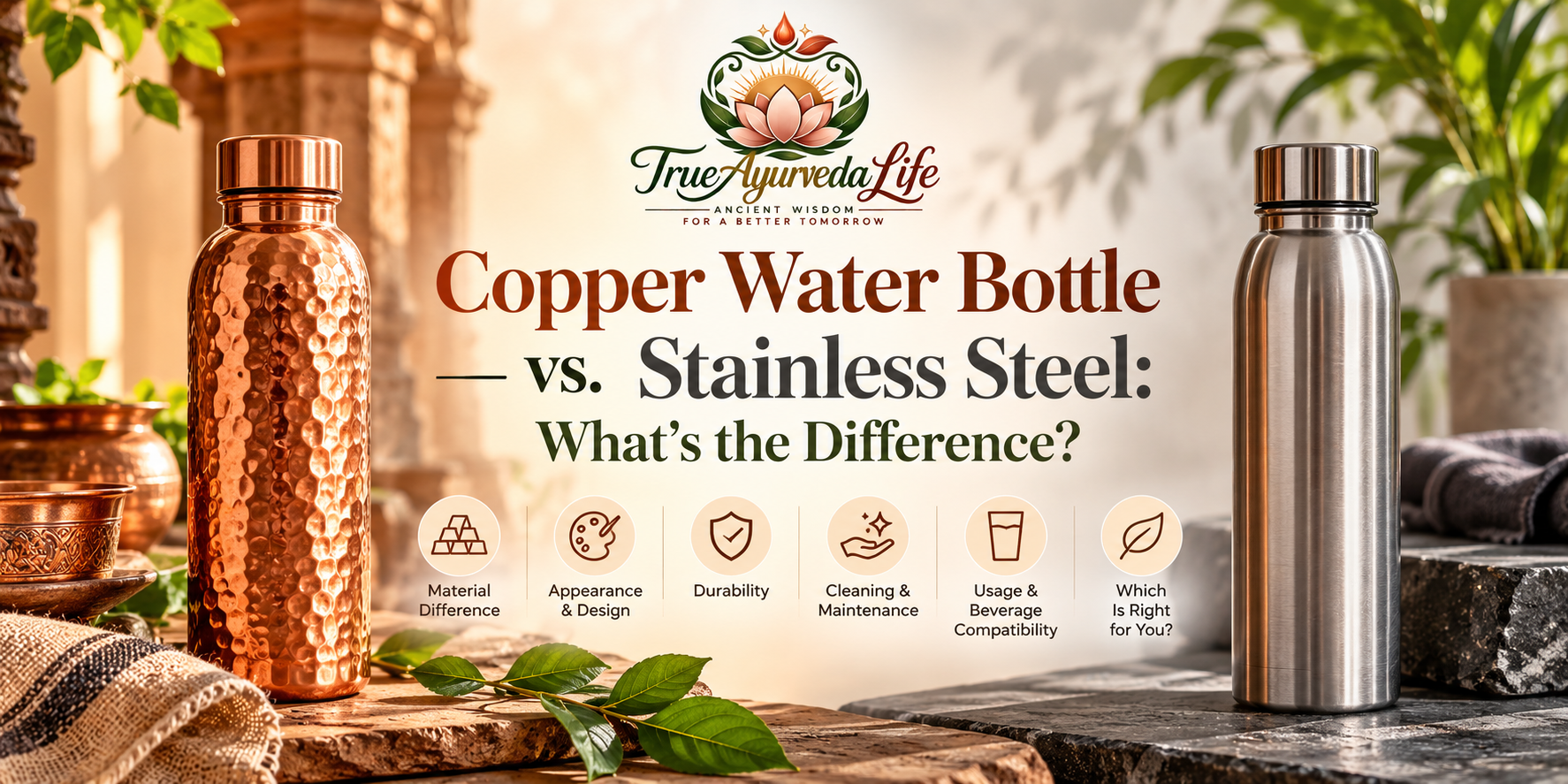
Choosing a reusable water bottle seems simple until you start comparing materials. Copper bottles have a long connection with traditional Indian households, while stainless steel bottles are widely used for commuting, travel, work, and everyday hydration. Both materials have their own characteristics, and the right choice depends on what matters most to you: appearance, maintenance, portability, craftsmanship, or traditional use.
So, when comparing a copper water bottle vs. stainless steel, what should you consider before making a purchase?
Let's look at the differences that matter in everyday life.
1. Understanding the Materials
What Is a Copper Water Bottle?
A copper water bottle is made with copper as the material of its body. It may feature a polished, smooth, or hammered finish, giving it a distinctive warm, reddish-brown appearance.
Copper vessels have traditionally been used in Indian households for storing drinking water. This practice is associated with tamba water and has a place in traditional Ayurvedic routines. Today, copper bottles bring that heritage into modern reusable drinkware, combining traditional material choices with designs suited to daily use.
What Is a Stainless Steel Water Bottle?
Stainless steel is an iron-based alloy containing chromium and, depending on the grade, other elements such as nickel. Chromium helps stainless steel resist corrosion. Stainless steel bottles are available in numerous designs, including single-wall and insulated models. Their appearance ranges from brushed metal to colourful coated finishes, making them versatile for different needs. The exact grade and construction matter, so check the manufacturer's specifications rather than assuming every stainless steel bottle performs identically.
2. Appearance and Craftsmanship
One of the most noticeable differences is visual style.
Copper bottles have a warm metallic finish that can complement traditional decor, handcrafted accessories, and natural materials. Hammered designs add texture, while smooth or polished surfaces create a more understated look.
Stainless steel bottles tend to offer a contemporary appearance. They may feature minimal designs, powder-coated colours, printed patterns, or insulated bodies with a clean, modern finish.
Your preference depends on personal style. If you appreciate traditional metalwork and distinctive copper tones, copper may appeal to you. If you prefer a wide variety of colours and modern designs, stainless steel offers plenty of options.
3. Durability and Everyday Handling
Both materials can be suitable for repeated use when the bottle is well made and properly maintained.
Copper is a relatively soft metal compared with stainless steel, so it may be more susceptible to dents and surface marks. Its appearance can also change over time through natural oxidation.
Stainless steel is generally harder and commonly used in reusable bottles designed to handle regular travel and handling. However, it can still dent, scratch, or suffer damage, particularly around seams, lids, and insulated construction.
For either material, examine the build quality, closure, and overall design. A well-made bottle that suits your routine is more useful than choosing solely by material.
4. Weight and Portability
Weight can make a difference when carrying a bottle throughout the day.
A copper bottle's weight depends on its dimensions and the thickness of its metal body. Larger bottles will generally be heavier, especially when filled with water.
Stainless steel bottles also vary in weight. Single-wall designs may be relatively light, while double-wall insulated models can be heavier because of their construction.
If you commute, travel frequently, or carry a bottle in a small bag, compare the empty weight and capacity before buying. These details can help you find a comfortable option for your everyday needs.
5. Cleaning and Maintenance
Both materials need regular cleaning, but their care requirements differ.
Copper can naturally develop a darker appearance or patina as it reacts with its surroundings. This change does not automatically mean the bottle is damaged. Follow the manufacturer's cleaning instructions, and avoid harsh cleaning methods that could damage the surface.
Stainless steel bottles are often straightforward to clean with warm water and mild dish soap. Bottles with narrow openings, complicated lids, or insulating components may require extra attention to ensure that all parts are cleaned and dried properly.
For both materials, regular cleaning is important. Pay particular attention to caps, seals, and hard-to-reach areas where moisture or residue may collect.
6. Water Storage and Beverage Compatibility
The intended use of a bottle is just as important as its material.
A traditional pure copper water bottle is generally intended for storing drinking water. Acidic beverages, including lemon water and fruit juices, can interact with copper and may increase copper release during contact. For this reason, use another suitable container for acidic drinks unless the manufacturer explicitly confirms otherwise.
Stainless steel bottles may accommodate a broader range of beverages, depending on their grade, lining, seals, and manufacturer's guidance. Some are designed for hot or cold drinks, while others have more specific usage limitations.
Always check the product instructions before storing anything other than plain water.
7. Copper, Stainless Steel, and Wellness
Copper has an established place in traditional Indian water-storage practices. In Ayurveda, storing water in copper vessels is associated with the traditional practice of tamba jal.
Copper is also an essential trace mineral needed by the human body in appropriate amounts. However, this does not mean that drinking from a copper bottle guarantees particular health outcomes.
Similarly, choosing stainless steel does not make a hydration routine inherently less healthy. Both bottle types can support regular water consumption when used appropriately with safe drinking water.
Avoid choosing either material based on exaggerated claims about detoxification, disease prevention, or guaranteed wellness benefits. Focus on reliable product information and practical suitability.
8. Design, Capacity, and Features
Before deciding, consider how you will use the bottle.
Copper bottles often emphasise material, finish, and traditional craftsmanship. They may suit people who prefer a distinctive design for a desk, home, or everyday carry.
Stainless steel bottles offer a broader range of specialised features, including vacuum insulation, sports lids, carrying loops, and designs intended to maintain beverage temperature.
Capacity also matters. A compact bottle may be convenient for short outings, while a larger one may reduce the need for frequent refills.
Compare the opening size, lid design, dimensions, and cleaning requirements to ensure the bottle fits your habits.
9. Which Bottle Is Right for You?
Choose a copper water bottle if you appreciate its traditional Indian heritage, warm appearance, and handcrafted aesthetic, and are comfortable following its specific care and usage instructions.
Choose a stainless steel water bottle if you prioritise a wide selection of designs, everyday practicality, or features such as insulation and specialised lids.
Neither option is automatically best for everyone. Construction quality, intended use, maintenance, and personal preference should guide your decision.
Final Thoughts: Choose What Fits Your Routine
The difference between copper and stainless steel goes beyond appearance. Each material offers distinct characteristics, from copper's traditional craftsmanship to stainless steel's versatility and range of modern designs.
At True Ayurveda Life, we appreciate the connection between traditional materials and contemporary living. A copper bottle can be a meaningful addition to your routine when you understand its intended use and care requirements.
Before purchasing, compare the material specifications, capacity, construction, and maintenance guidance. Choose a bottle that fits your everyday needs rather than relying on broad claims about which material is universally superior.
Good hydration starts with a simple habit—and the right bottle is the one you'll use comfortably and consistently.