
Copper Water Bottles: What’s Real, What’s Marketing & What to Look For
By TrueAyurvedaLife Editorial Team ·
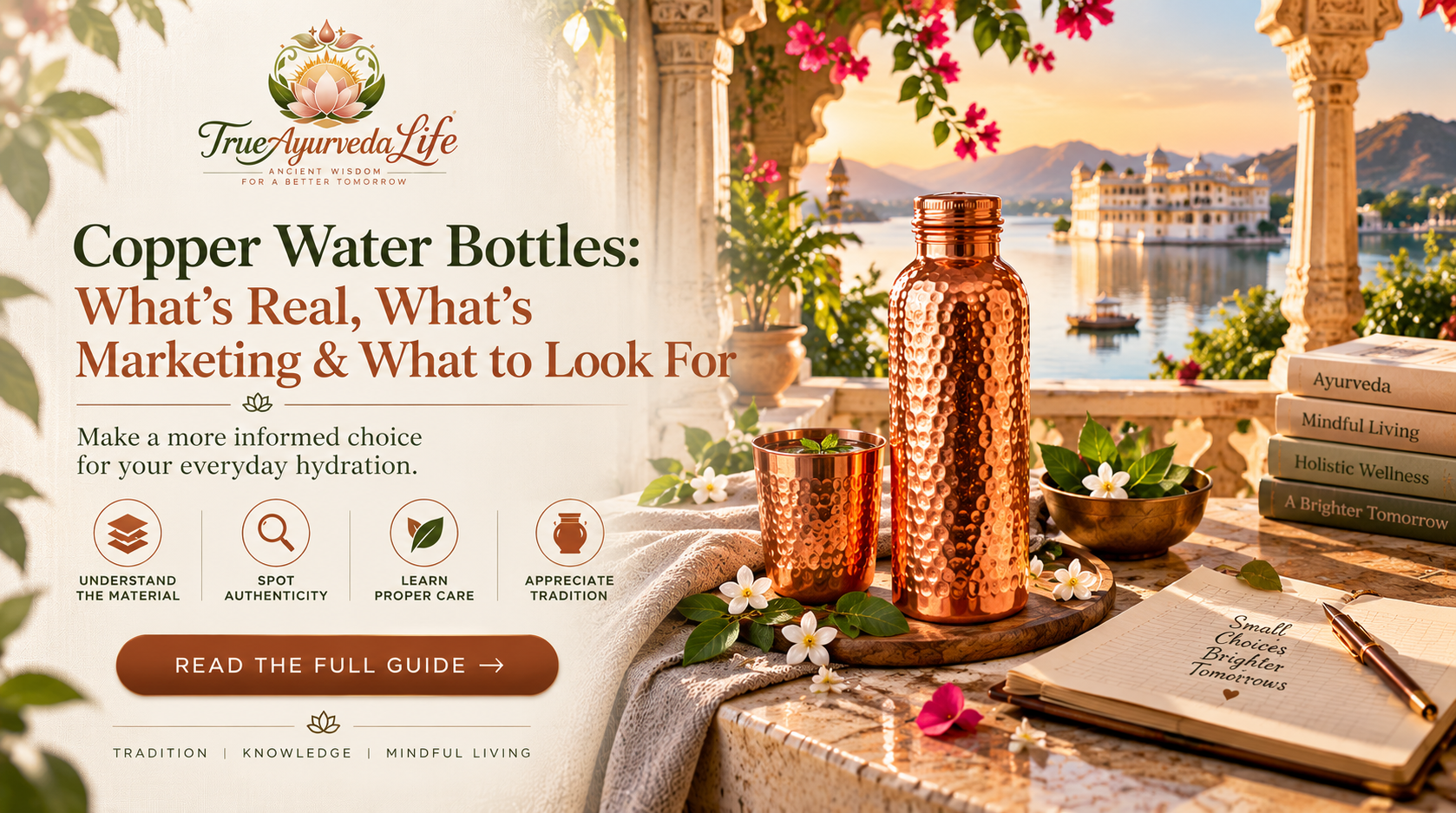
Not every bottle that looks like copper is actually made the same way.
Today, you can find water bottles described as pure copper, copper-plated, copper-finish, hammered copper, Ayurvedic copper bottles and more. At first glance, many of them can look almost identical. But the material, construction, craftsmanship and care requirements can be very different. And when wellness products are surrounded by bold claims, it can become difficult to separate useful information from marketing.
If you're considering a pure copper water bottle, the most important question isn't simply, “What benefits does it promise?”
It is: “What am I actually buying?”
Here's what to look for before choosing a copper bottle for drinking water.
1. Start With the Material
The first thing to understand is whether the bottle is actually made from copper or simply has a copper appearance. A 100% copper water bottle is made primarily from copper, while a copper-plated bottle uses another material underneath a thin copper layer. These are fundamentally different constructions. Copper-plated products can have their place, but they shouldn't be presented as equivalent to a genuine pure copper water bottle.
When shopping online, look for clear product information describing:
- The primary material
- Whether the bottle is pure copper or copper-plated
- Whether any interior coating or lining is present
- Product dimensions and capacity
- Care instructions
- Manufacturer or brand information
A trustworthy product description should make these details easy to understand.
2. Don't Judge a Bottle by Its Colour
Copper has a distinctive warm, reddish-golden appearance, but colour alone doesn't tell you what a bottle is made from.
Different finishes can make stainless steel, aluminium and other metals resemble copper.
This is why a copper bottle for drinking water should be evaluated based on its material specifications rather than appearance alone.
A photograph can show you the finish.
The product specifications should tell you what's underneath it.
If a product listing is vague about its construction, that's worth considering before purchasing.
3. Understand the Difference Between Pure Copper and Copper-Plated
This is one of the most important distinctions for buyers.
Pure copper
A genuine pure copper bottle uses copper as the main material throughout the vessel. Its natural colour, texture and patina can change over time.
Copper-plated
A copper-plated bottle has another metal underneath, with a copper layer applied to the surface. The two products may look similar in a photograph, but their construction is different. If your goal is to incorporate the traditional copper-water practice into your daily routine, understanding this difference helps you choose a product that matches that intention.
4. Look for Clear Product Information
Good product information doesn't need to make dramatic promises. It should answer straightforward questions.
What is it made from?
How much water does it hold?
How should it be cleaned?
What should you put inside it?
How should it be stored?
Who made it?
These details may seem simple, but they are important when you're choosing a vessel that you intend to use regularly.
For drinking-water safety more broadly, the quality of the water itself matters too. The World Health Organization's drinking-water guidance focuses on managing risks throughout the water supply chain, from source to consumer.
A copper bottle should therefore be viewed as a water vessel, not as a replacement for safe drinking-water practices.
5. Copper Is a Material With a Long History
Copper isn't a new wellness trend. Across India, copper vessels have long been associated with traditional household practices and Ayurvedic routines. The tamba water bottle is a modern expression of that longstanding relationship with copper vessels. At the same time, tradition and modern scientific claims should not automatically be treated as the same thing.
Copper is an essential trace element, and copper is also specifically addressed in the WHO Guidelines for Drinking-water Quality. WHO's current guidance includes a health-based guideline value for copper in drinking water because excessive exposure can cause adverse effects. That is why responsible communication matters.
A copper bottle can be part of a traditional hydration ritual without claiming to cure diseases, replace medication or solve every health concern.
6. Don't Confuse Traditional Use With Medical Claims
This is where wellness marketing can sometimes become confusing. You may see copper bottles promoted using claims about detoxification, inflammation, digestion, energy, cognitive function and numerous other health outcomes. Some claims may be based on laboratory research, traditional practices or individual experiences. That does not mean that drinking water from a copper vessel has been established as a treatment for a medical condition.
A responsible approach is to appreciate copper for what it is: a traditional material with distinctive physical and antimicrobial properties, used in many contexts, including water and food-contact applications. The WHO specifically notes that copper is present in drinking-water guidance because exposure levels matter.
For everyday use, follow the manufacturer's instructions and use the bottle for its intended purpose.
7. Learn How Copper Changes With Time
One of the beautiful things about a genuine copper bottle is that it doesn't necessarily look exactly the same forever. Copper naturally reacts with its environment.
Over time, its surface may develop changes in colour or patina. Small variations can occur depending on humidity, handling, cleaning methods and exposure to air. For some people, this is part of the appeal. Unlike mass-produced materials designed to look identical year after year, copper can develop its own character.
A hammered copper bottle can become something more personal with use—an everyday object that reflects its material and craftsmanship.
8. Know What to Put in Your Copper Bottle
A copper water bottle is generally intended for water, rather than every beverage you might normally carry in a reusable bottle. Avoid experimenting with acidic drinks such as lemon juice, fruit juices or vinegar-based beverages unless the manufacturer specifically states that the bottle is designed for them. Acidity can affect copper surfaces and increase copper transfer into liquids.
9. Care Matters
A copper bottle doesn't require complicated maintenance, but it does benefit from regular care.
A simple routine can include:
- Emptying the bottle regularly
- Washing according to the manufacturer's instructions
- Rinsing thoroughly
- Allowing it to dry completely
- Avoiding harsh or unsuitable cleaning products
- Not storing beverages that aren't recommended for copper
Over-cleaning or using abrasive materials can also affect the appearance of the copper. The goal isn't to keep the bottle looking factory-new forever. The goal is to keep it clean, functional and well cared for.
10. Look Beyond the Bottle
A good copper bottle is more than a material specification.
Consider the details you'll interact with every day:
The shape: Is it comfortable to hold?
The opening: Is it practical to fill and clean?
The lid: Does it close securely?
The weight: Is it comfortable to carry?
The finish: Do you actually enjoy using it?
The craftsmanship: Does the product show attention to detail?
These practical considerations often matter more than a long list of marketing claims. After all, the best bottle for your routine is one you'll actually enjoy carrying and using.
Choosing Copper With Confidence
The growing interest in copper water bottles has brought traditional materials into a modern marketplace. That creates more choice—but it also means buyers need clearer information. Before purchasing a pure copper water bottle, look beyond the photographs.
- Check the material.
- Understand the construction.
- Read the care instructions.
- Look for transparent product information.
- Be cautious about exaggerated health promises.
- And choose something that genuinely fits the way you live.
At TrueAyurvedaLife, our approach is inspired by the enduring relationship between copper, Indian craftsmanship and mindful everyday hydration. We believe a wellness product doesn't need exaggerated promises to be meaningful. Sometimes, it's about choosing a well-made object, understanding its material, caring for it properly and turning an ordinary habit into a more intentional daily ritual.
Make Your Everyday Hydration More Intentional
If you've been looking for a copper water bottle that combines traditional character with contemporary everyday use, explore the TrueAyurvedaLife collection.
Pure copper. Thoughtful craftsmanship. A timeless hydration ritual.
→ Explore TrueAyurvedaLife Copper Bottles