
Copper vs Steel Water Bottle: Which One Should You Choose?
By Wellness Team ·
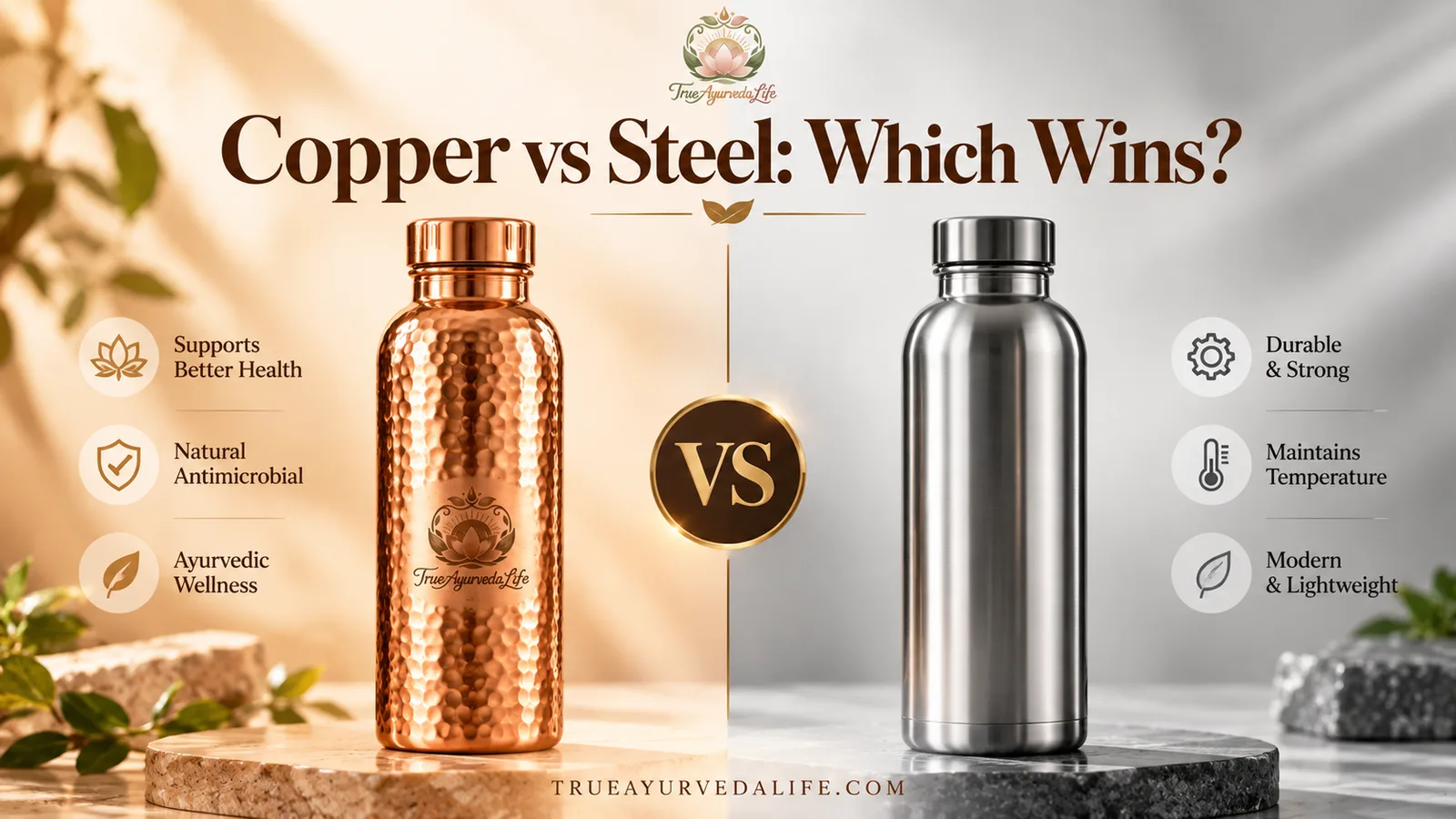
Standing in front of two water bottles — one copper, one stainless steel — and wondering which one deserves a spot on your desk? You're not alone. "Copper vs steel water bottle" is one of the most common questions people ask before making the switch to a reusable bottle. Here's an honest, side-by-side comparison to help you decide, based on what each metal actually does and doesn't do.
The Short Answer
Copper is a functional metal — plain water reacts with it, which is exactly the point behind the Ayurvedic copper water ritual and its associated trace-mineral benefits. Stainless steel is a neutral metal — it doesn't react with anything you put in it, which makes it the more practical, all-purpose, all-day bottle. Neither one is objectively "better"; they're built for different jobs, and understanding that difference is really the whole question.
Quick Comparison: Copper vs Steel
| Factor | Copper Bottle | Stainless Steel Bottle |
|---|---|---|
| Traditional wellness benefits | Yes — Ayurvedic Tamra Jal ritual | None — purely functional |
| Antimicrobial properties | Naturally antimicrobial (oligodynamic effect) | Inert, no antimicrobial effect |
| Temperature retention | Moderate — not designed for insulation | Excellent with double-wall vacuum insulation |
| Best liquids to store | Plain water only | Water, tea, coffee, juices, cold drinks |
| Maintenance | Needs weekly cleaning with lemon & salt | Low maintenance, dishwasher-safe (most models) |
| Weight & feel | Heavier, premium tactile feel | Lighter, more travel-friendly |
| Aesthetic | Rustic, artisanal, develops a natural patina | Sleek, modern, remains uniform over time |
| Price range | Moderate | Moderate to high (especially insulated models) |
What Is a Pure Copper Bottle, Really?
A genuine copper bottle is made from 99.9% uncoated copper — no lacquer, no plating. That's important because the entire reason to choose copper over steel is the oligodynamic effect: trace copper ions transferring into water during storage, giving the water the properties covered in our copper water bottle benefits guide. A lacquered or copper-plated bottle looks the part but doesn't do any of this — you'd be paying for the aesthetic of copper while getting the function of steel.
Copper Bottles: Where They Win
1. The Ayurvedic Wellness Ritual
This is copper's biggest differentiator. Storing water overnight in a pure copper bottle and drinking it in the morning — known as the Ayurveda copper water ritual — is a practice steel simply cannot replicate, because steel is chemically inert and doesn't transfer trace minerals into water.
2. Natural Antimicrobial Properties
Copper has a well-documented oligodynamic effect, meaning it can naturally help reduce certain bacteria in stored water. Steel has no such property — it neither adds minerals nor has antimicrobial action.
3. A Ritual, Not Just a Container
A copper bottle isn't meant to be refilled all day like a steel bottle. It's designed around a specific evening-fill, morning-drink ritual, which for many users becomes a grounding daily habit tied to Ayurvedic living.
4. Craftsmanship and Aesthetic
Hand-hammered and diamond-hammered copper bottles are as much a design statement as a wellness tool — each piece is unique, and the metal develops a beautiful natural patina with age.
Stainless Steel Bottles: Where They Win
1. Versatility
Steel bottles can hold anything — hot coffee, cold water, juices, electrolyte drinks — without any restriction. Copper should only ever be used for plain water.
2. Insulation
Double-wall vacuum-insulated steel bottles keep drinks hot or cold for hours, something copper bottles are not designed to do.
3. Low Maintenance
Steel doesn't oxidize or develop a patina, so there's no need for the weekly lemon-and-salt cleaning ritual that copper requires.
4. Better for Travel and Daytime Carry
Since steel bottles can be refilled and used throughout the day with any beverage, they're more practical for gym bags, office desks, and travel.
Which One Should You Choose?
The honest answer: they serve different purposes, and many households use both.
- Choose a copper bottle if your goal is to follow the traditional Ayurvedic morning ritual, you want the natural antimicrobial and trace-mineral benefits of copper, or you value the craftsmanship and aesthetic of a hand-hammered piece.
- Choose a steel bottle if you need an all-day, all-beverage, low-maintenance bottle for the gym, office, or travel — where insulation and versatility matter most.
A popular approach: keep a copper bottle at home for your morning Tamra Jal ritual, and carry a steel or copper sipper bottle for daytime hydration.
Which Should You Choose? A Few Real Scenarios
- You want to start the Ayurvedic morning ritual: Copper, no contest — steel can't replicate Tamra Jal because it doesn't interact with the water at all.
- You carry a bottle to the gym or on a flight, filling it with whatever's on hand: Steel — you'll want to put electrolyte drinks, cold water, or juice in it without a second thought.
- You want a bottle that keeps water cold for a 6-hour hike: Steel, specifically a double-wall vacuum-insulated model — copper isn't built for insulation.
- You want a meaningful, gift-worthy piece with visible craftsmanship: Copper, especially a hand-hammered or diamond-hammered finish — steel bottles tend to look identical off the shelf.
- You want one bottle to handle literally everything: Steel is the pragmatic single choice, but you'll be trading away every Ayurvedic and trace-mineral benefit copper offers.
Common Myths, Debunked
"Copper bottles are unsafe for daily use."
Not true when using a genuine 99.9% pure, lab-tested, lead-free copper bottle in moderation (1-2 glasses of overnight-stored water daily). Only excessive or improper use — like storing acidic liquids or boiling water in copper — poses a risk.
"Steel bottles are always better because they're 'modern'."
Steel is a great all-purpose bottle, but it doesn't offer copper's traditional Ayurvedic and trace-mineral properties — the two solve different problems.
"You can use copper and steel interchangeably."
Not quite — copper is meant for plain water only and shouldn't be used for hot beverages, juices, or acidic drinks, while steel has no such restriction.
Frequently Asked Questions
Is copper or steel better for health?
Copper offers traditional Ayurvedic wellness benefits and natural antimicrobial properties when used correctly for plain water. Steel offers no such benefits but is completely neutral and versatile for any beverage. Neither is "unhealthy" — they simply serve different needs.
Can I drink hot tea or coffee from a copper bottle?
No. Copper bottles should only be used for storing plain drinking water at room temperature. Heat accelerates copper leaching to unsafe levels.
Which bottle is more durable — copper or steel?
Both are highly durable when cared for properly. Steel resists dents and oxidation better, while copper develops a natural patina that many consider a desirable, living finish rather than wear and tear.
Is a copper bottle worth the extra care it needs?
If you're specifically looking to follow the Ayurvedic copper water ritual, yes — the weekly lemon-and-salt cleaning takes just a couple of minutes and is part of the overall ritual itself.
Can I switch between copper and steel bottles day to day?
Yes — many people use copper only for their morning Tamra Jal water and a steel bottle for everything else during the day. There's no conflict in owning and using both for their respective purposes.
Does copper water taste different from water in a steel bottle?
Yes, noticeably. Steel is neutral and doesn't change the taste of water at all. Copper-stored water often has a subtly sweet, clean taste that many people specifically seek out.
Conclusion
There's no single "winner" between copper and steel — the right choice depends on what you're optimizing for. If you want a traditional Ayurvedic wellness ritual with natural antimicrobial benefits (see our full benefits breakdown), a pure copper water bottle is unmatched. If you want an all-day, all-beverage, insulated companion, steel is the practical choice. Many wellness-focused households simply keep one of each — copper for the ritual described in our Ayurveda copper water ritual guide, and steel for everything else.