
Copper and Ayurveda: Understanding the Tradition Behind Tamba Water
By TrueAyurvedaLife Editorial Team ·
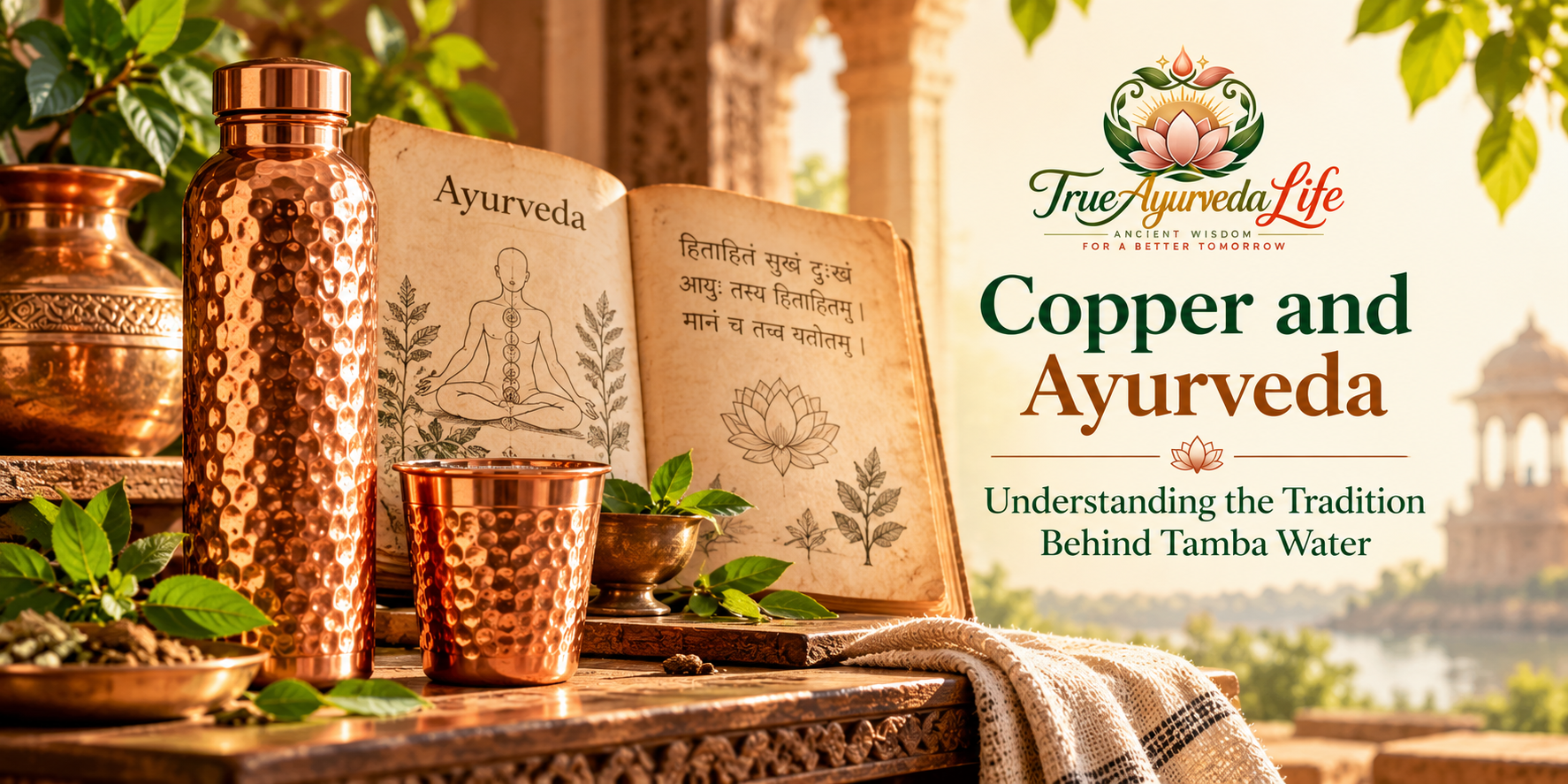
Copper has held a distinctive place in Indian households for generations. From traditional water vessels to objects used in cultural ceremonies, the metal is valued for its practical qualities, familiar appearance, and historical significance. Within conversations about Ayurveda, copper is often associated with Tamba Jal—water stored in a copper vessel. This practice has attracted renewed interest as people explore traditional approaches to everyday living. However, understanding copper and Ayurveda requires more than repeating popular wellness claims. It means exploring the traditional context, distinguishing historical beliefs from established scientific evidence, and recognising how this practice can be approached responsibly today.
1. Understanding Ayurveda and Its Traditional Approach
Ayurveda is a traditional system of health and wellness that developed in India over many centuries. Its approach encompasses diet, daily routines, personal care, seasonal practices, and broader ideas about maintaining balance.
A concept often associated with Ayurvedic living is dinacharya, which refers to daily routines. These routines may include waking habits, oral care, physical activity, meals, and other practices intended to bring structure to everyday life.
Copper vessels are part of some traditional Indian household and Ayurvedic practices. Their continued use reflects the wider relationship between materials, domestic customs, and traditional ideas about wellbeing. It is important, however, not to treat every modern claim about copper as an established Ayurvedic principle. Traditional practices vary, and specific recommendations should be understood in their appropriate historical and cultural context.
2. What Is Tamba Jal?
Tamba is the Hindi word for copper, while jal means water. Tamba Jal generally refers to water stored in a copper vessel.
Historically, copper containers were among the vessels used in Indian homes to hold drinking water. Today, copper bottles provide a portable version of this familiar practice. The term is simple, but its significance can be broader. For some households, storing water in copper connects everyday hydration with family customs and inherited traditions.
The practice is also discussed in contemporary wellness settings, where copper bottles are presented as a way to bring traditional materials into modern routines. Understanding Tamba Jal starts with recognising it as a traditional water-storage practice. Any additional health claim requires separate consideration rather than being assumed to follow automatically from the tradition.
3. Why Has Copper Been Used Traditionally?
Copper has several physical and chemical properties that help explain its longstanding use. It is a workable metal that can be shaped into vessels and other household objects. It also conducts heat efficiently and has a distinctive appearance that changes over time as its surface interacts with the environment.
Copper surfaces have demonstrated antimicrobial activity under certain conditions. Research into copper's antimicrobial properties has examined how microorganisms interact with copper surfaces. However, results depend on factors such as the organism, contact conditions, and the specific application. These findings do not establish that water stored in every copper vessel is automatically safe, or that copper storage replaces reliable drinking-water treatment.
Historically, materials were often selected because they were available, workable, durable enough for their intended use, and valued within local customs. Copper's role in traditional water storage reflects a combination of practical and cultural factors.
4. Copper in Ayurveda: Tradition and Interpretation
Copper is discussed in different contexts within traditional Indian knowledge, including household practices and aspects of Ayurveda. Its meaning depends on the particular practice being considered.
One important distinction is between storing drinking water in a copper vessel and using copper-containing preparations in traditional medicine. These are not the same practice.
Copper-containing medicinal preparations require specialised knowledge and careful consideration of composition, preparation, dose, and safety. They should not be treated as interchangeable with ordinary copper drinkware.
Similarly, claims that Tamba Jal balances particular bodily systems, detoxifies the body, or treats specific conditions should not be presented as scientifically established simply because they are associated with Ayurveda in popular writing.
An educational approach respects traditional knowledge while being clear about the limits of the evidence.
5. What Does Modern Science Say About Copper?
Copper is an essential trace mineral. The human body uses it in several biological processes, including enzyme activity, energy metabolism, and the functioning of connective tissues and the nervous system. Both insufficient intake and excessive exposure can be harmful. The amount of copper a person receives depends on multiple sources, including food, drinking water, and other environmental exposures.
Copper can dissolve from a vessel into water under certain conditions. Factors such as acidity, water chemistry, and contact time influence the amount released. This is one reason the material and intended use of a drinking vessel matter.
The World Health Organization provides guidance on copper in drinking water, reflecting the importance of managing exposure rather than assuming that greater copper intake is always beneficial.
For consumers, the practical lesson is straightforward: copper is necessary in appropriate amounts, but a copper bottle should not be treated as a prescribed mineral supplement or a medical intervention.
6. Why Do People Choose Copper Bottles Today?
Modern interest in copper drinkware reflects several motivations beyond health claims.
Cultural connection: Some people value the opportunity to continue a familiar Indian household tradition.
Material and craftsmanship: Copper has a warm metallic colour and can be finished through polishing, hammering, and other metalworking techniques.
Reusable design: A copper bottle can be used repeatedly, making it an alternative to frequently purchasing disposable bottled water.
Daily routine: Keeping a dedicated bottle nearby can encourage people to make drinking water a regular part of their day.
These reasons stand independently of claims about disease prevention or guaranteed health benefits. A product can have cultural, aesthetic, and practical value without needing exaggerated promises.
7. Bringing the Tradition Into Modern Life
Anyone interested in incorporating Tamba Jal into a contemporary routine should begin with the intended use of the vessel.
Choose a bottle with clear material specifications and use clean, potable water. Follow the manufacturer's directions for storage, use, and care. Ordinary copper bottles are generally intended for plain water rather than acidic drinks such as lemon juice, which can increase copper release.
A copper vessel should not be used as a substitute for appropriate drinking-water treatment. Water from an unsafe source must be made safe using a suitable method.
People with conditions that affect copper metabolism should consult a qualified healthcare professional before deliberately increasing their exposure to copper.
These considerations do not diminish the cultural value of the practice. They help place it within a responsible modern context.
8. Tradition, Evidence, and Informed Choices
Traditional practices can offer insight into how earlier generations organised daily life and selected household materials. They can also provide a meaningful connection with family customs and cultural identity.
At the same time, traditions and scientific evidence answer different questions. Historical use can explain why a practice matters to a community, while scientific research helps evaluate specific claims about composition, exposure, safety, and health outcomes.
A balanced understanding of copper and Ayurveda makes room for both perspectives. It recognises the heritage of copper vessels without assuming that every popular wellness claim has been proven.
Final Thoughts
Copper's relationship with Ayurveda and traditional Indian living is shaped by history, household customs, material properties, and evolving interpretations of wellness. Tamba Jal remains a familiar expression of this connection, bringing a traditional vessel into an everyday activity.
At True Ayurveda Life, we believe traditional materials deserve thoughtful design and clear information. Choosing a copper water bottle can be a way to appreciate Indian craftsmanship and incorporate a reusable vessel into daily life.
Pure copper. Thoughtful craftsmanship. Carry the wisdom of tradition into everyday life.